
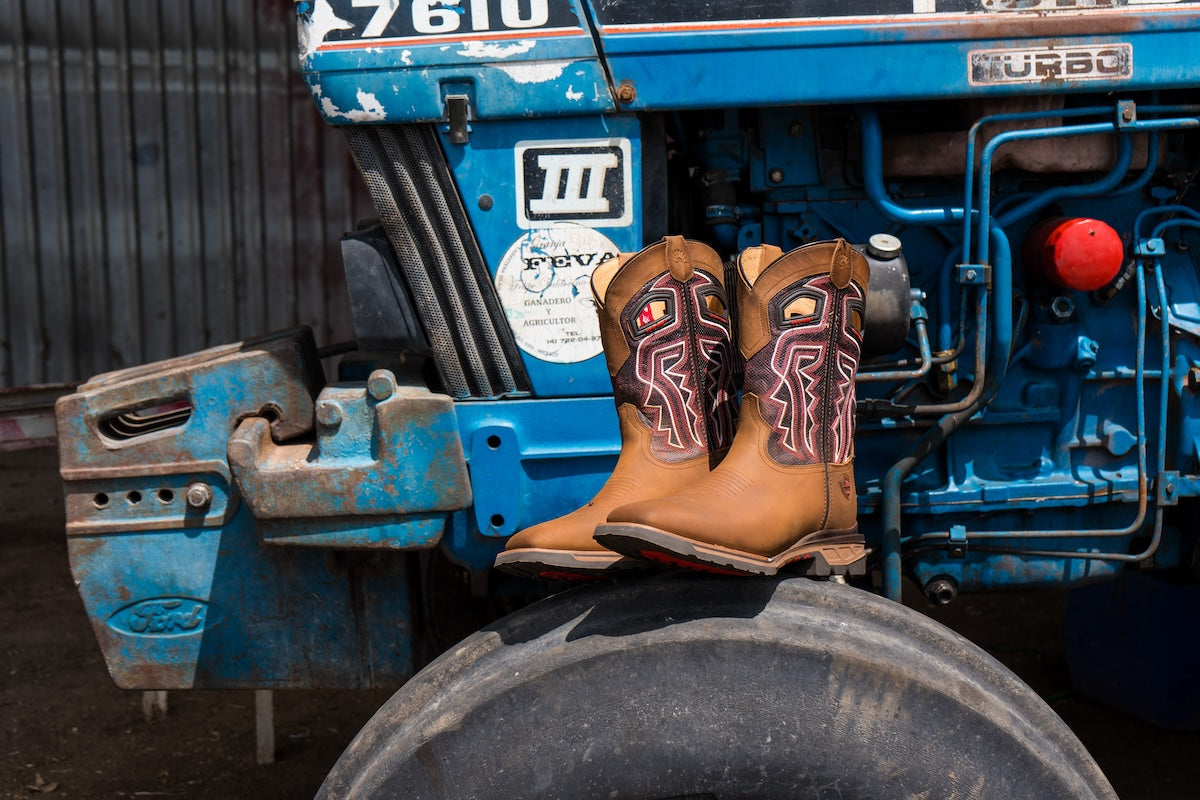
Maintaining work boots starts with something key: choosing the right type of boots for the job you do. This ensures their durability. If your job requires special protection, such as wearing steel toe caps, it's advisable to use boots with toe protection to prevent premature wear in this area.
Important notes:
- Changing insoles: Ideally, they should be changed every 2 months . For heavy-duty work, it is recommended to do so every month . The maximum should be every 3 months .
- Steel toe caps: Boots with steel toe caps tend to wear out faster in that area. To prolong their lifespan, use toe protectors .
Skin Maintenance
Depending on your work environment, your boots will require different care products . The most important methods are detailed below:
1. Exposure to Chemicals:
If you work in areas where there is frequent contact with fertilizers, oils, or chemicals (such as gas stations or oil refineries), follow these steps:
- Removing chemical stains: Use a suitable solvent to remove any chemical stains as soon as possible. This will prevent the chemicals from penetrating and damaging the skin.
- Protocol to avoid bringing chemicals into your home:
- Clean your boots before leaving the workplace.
- Change your shoes in a designated area before entering your home to avoid bringing in hazardous waste.
- Boot grease: Apply protective boot grease after cleaning to create an extra layer of protection that prevents chemicals from penetrating.
2. Exposure to Soil and Mud:
For jobs where contact with soil or mud is common, follow this manual:
- Initial cleaning: Remove excess dirt or mud with a soft brush or a damp cloth.
- Drying: If the boots get wet, let them air dry for at least a day . Never use direct heat (such as a hairdryer or heater) as this can damage the leather.
- Boot rotation: To prevent boots from accumulating moisture and developing fungus, it's recommended to have more than one pair . Alternate their use so that one pair dries completely while you wear the other.
- Humidity: Humidity is one of the factors that most causes wear and tear on boots. Therefore, if you work in contact with water or wet terrain, consider having a pair of rubber Wellington boots , which are more resistant to moisture and easy to dry.
- Rotating pairs: Rotating pairs not only limits wear and tear, but also reduces the risk of developing fungus in the boots, as it gives them enough time to dry between uses.
Durability and Life Cycle of Work Boots
Choosing the right type of boot depends not only on comfort but also on durability and the ability to repair them over time. Below, we explain the durability of different types of boots and soles, as well as the possibility of resoling them.
Boots with Goodyear Welt Construction
Boots made using the Goodyear welt method are known for their high durability and repairability. This construction technique ensures that the sole is stitched to the boot, allowing it to be replaced when worn, thus extending the life of the boots.
- Durability: These boots can last from 3 to 10 years or more, depending on use and maintenance. They are ideal for those looking for a long-term investment.
- Possibility of resoling: Yes, these boots can be resoled several times, making them an excellent option if you want to extend their use.
Boots with Glued Soles
Boots with glued soles are cheaper, but have a shorter lifespan, as the soles are glued on rather than stitched.
- Durability: They have an average lifespan of 1 to 2 years , depending on use. If the boots are exposed to extreme conditions, their durability will be even shorter.
- Possibility of resoling: In most cases, they cannot be resoled , which limits their useful life when the sole wears out.
Durability of the Soles
The type of sole also plays an important role in the durability of boots. Here are the most common materials and their life cycle.
Rubber soles
Rubber soles are extremely resistant to wear and slippage. They are one of the most popular choices for jobs requiring high traction and durability .
- Durability: They can last between 2 and 4 years , depending on use. They are ideal for outdoor work or in wet and slippery conditions.
- Possibility of resoling: Yes, rubber soles can be replaced, especially on boots with Goodyear welt construction.
EVA (Ethylene-Vinyl Acetate) soles
EVA soles are lightweight and flexible, offering excellent cushioning, but they are not as durable as other materials.
- Durability: They have a lifespan of 1 to 2 years in light-duty work. They wear out more quickly if used on rough terrain or with a lot of direct contact with the ground.
- Possibility of resoling: No, EVA soles are generally not resolable, as they are glued on and deteriorate easily.
Polyurethane (PU) soles
Polyurethane soles are lightweight, chemical-resistant, and have good durability, making them ideal for industrial work or environments with exposure to chemicals.
- Durability: They last between 2 and 5 years , depending on the type of work. In industrial applications, they may last less time due to constant exposure to corrosive substances.
- Possibility of resoling: In some cases yes, but it depends on the condition of the boot and its construction.
TPU (Thermoplastic Polyurethane) soles
TPU soles combine flexibility with superior wear resistance, making them ideal for demanding terrain or jobs requiring high abrasion resistance .
- Durability: They can last between 3 and 5 years , as they withstand wear and tear well. They are perfect for outdoor work or in areas where a non-slip sole is needed.
- Possibility of resoling: Yes, especially in high-quality boots such as those with Goodyear welt construction.
Signs You Need to Change Your Work Boots
Despite proper maintenance, there comes a time when work boots need to be replaced to ensure your safety and comfort. Below, we present the most important signs that indicate it's time to change your boots and the specific situations in which you should consider doing so.
- Sole Wear
The sole is one of the first components to show signs of wear. If you notice any of the following problems, you probably need to replace your boots:
- Worn or smooth sole: If the sole has lost its traction or has completely smooth areas, it can be dangerous to continue using them, especially on slippery surfaces.
- Sole separation: If the sole begins to separate from the boot, support and stability are compromised. This is more common in boots with glued soles.
- Skin Wear
The toe area is especially vulnerable, particularly if you wear boots with steel toes . Some key indicators include:
- Steel toe exposure: If the steel starts to protrude or the material around the toe cap has worn down significantly, it's a clear sign that the boots have lost their ability to protect your feet.
- Visible wear on the toe cap: Even without a steel toe cap, if the toe cap shows excessive wear or damage to the leather, the boots no longer offer the same protection.
- Loss of Waterproofing
If you work in wet environments or with exposure to liquids, the waterproofing of your boots is crucial. Some signs that the waterproofing has failed include:
- Water or moisture seepage: If your feet feel wet even though the boots look intact, the waterproof layer has failed.
- Loose or broken seams: Worn seams can allow water or moisture to enter, reducing the boots' ability to keep your feet dry.
- Loss of Support and Comfort
Over time, boots lose their ability to provide adequate support, which can affect your posture and cause pain in your feet, ankles, or back.
- Feeling of discomfort or pain: If your feet start to hurt or you feel discomfort in the heel or arch areas, despite using new insoles, the boots are no longer providing the necessary support.
- Loss of fit: If you notice that the boots no longer fit as they used to (looser or tighter), they have probably become deformed with use.
Proper maintenance of your work boots is essential to maximize their durability and ensure your safety in the workplace. Regularly changing the insoles, protecting vulnerable areas like the toe, and cleaning the boots correctly according to the conditions they are exposed to will extend their lifespan. However, it is crucial to pay attention to signs of wear, especially on the sole, the boot's structure, and the inner lining. Replacing these parts promptly will prevent discomfort and keep you protected at all times.


Leave a comment
All comments are moderated before being published.
This site is protected by hCaptcha and the hCaptcha Privacy Policy and Terms of Service apply.